Once again – the winter season is upon us and the dropzone isn’t open. Brrr! Skydiving is on hold unless we are able to travel to a warmer state to make a jump and stay current. Most of us will be away from the sport for a month or two.
We can, however, use this down-time to get reacquainted with some of the more subtle, and often neglected, aspects of the sport. Let’s consider the idea that currency in skydiving is about much more than when you made your last jump.
If we think about everything that leads up to a successful skydive, or a whole day of successful skydiving, there are a number of skills, or even habits, that we should all cultivate.
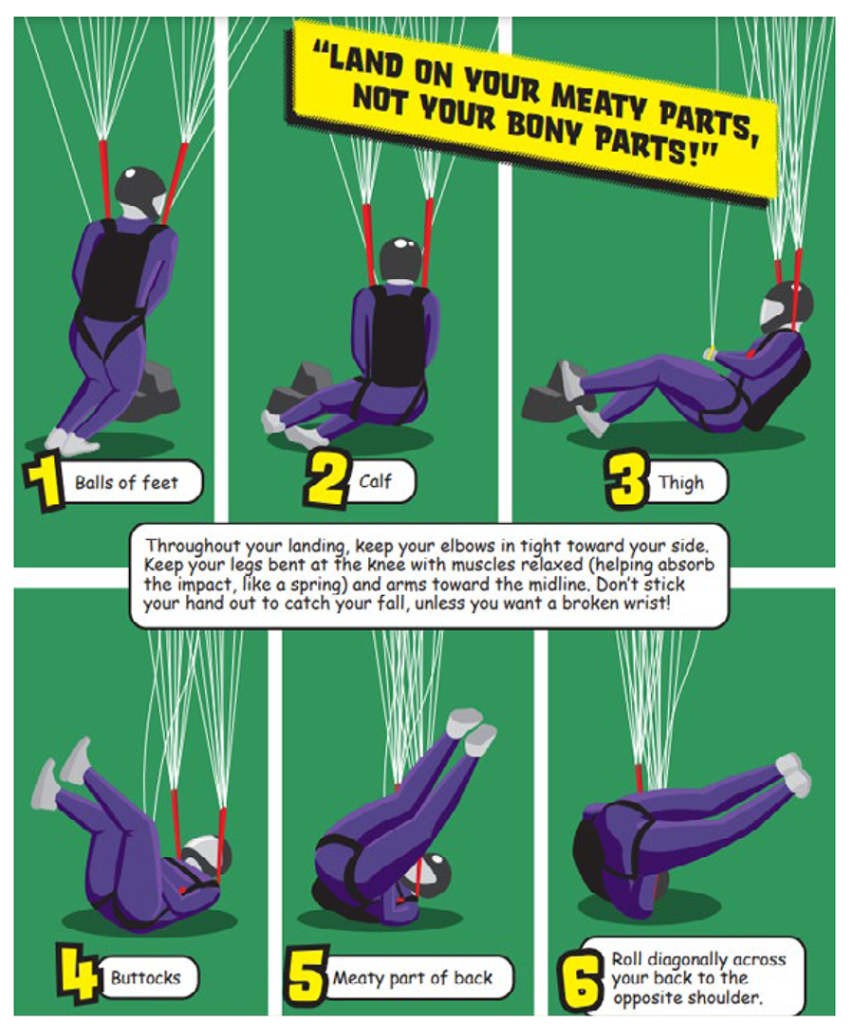
The Parachute Landing Fall, or PLF
When was the last time you practiced your PLF? If it’s been awhile, now is a great time to get in some good practice. Remember back to your student training: find a soft place, and remember to practice landing to both your left and your right sides.
Begin by starting with the most basic PLF with your knees on the floor, then from a standing position, then from chair height, etc. You may never have to use it, but we should all be ready to execute a PLF on any given landing. Try it in the snow, you’ll impress your friends!
Graphic courtesy of UPSA.org
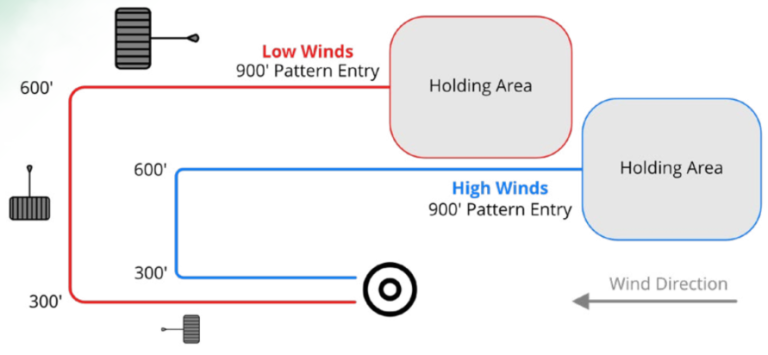
Weather Conditions & Landing Pattern Adjustments
Find a good weather channel or app, and get into the regular habit of looking at conditions that can affect skydiving. Specifically, you’ll want data on surface and upper level wind conditions. Compare the data to what you feel and experience when you go outside every day. Get into the habit of going outside every day and feeling the weather – don’t just observe the conditions. Face into the wind and imagine yourself having to land in those conditions, if you had to. Locate your approximate pattern setup and entry point, where (and how!) you might fly your base and final, etc.
Graphic Courtesy of USPA.org
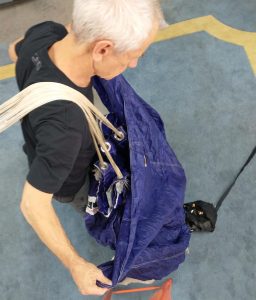
Practice Packing!
Are you good at packing? Can you pack your main in less than 20 minutes? Without the pressure of making the next load, winter gives us the opportunity to refine our packing techniques, and really learn to control things. The better you can control the fabric, the better and faster you’ll be able pack, and it is a known fact that the more and faster you can pack, the more often you can skydive. Get good at packing; it’s worth it!
Remember: Great exits, soft openings, and beautiful landings don’t just happen! Luck may sometimes play a part, but great outcomes are the usually results of great preparation. If you’re a skydiving student, or just new to the sport with less than 100 or so jumps, you’ll benefit by developing these skills and habits as soon as you can manage them!
Photo Courtesy of USPA.org
Coming up in Part 2: Inspecting your main parachute and container!